Participation Rank (Real time)
ScoreboardTop 1(50,000 KRW)To be announced
Top 2-3(40,000 KRW)To be announced
Top 4-6(30,000 KRW)To be announced
Top 7-20(20,000 KRW)To be announced

UNI111 Fall 2026
A first-year tour of computer science and engineering, from systems and HCI to AI and security, taught by the CSE faculty. Wednesdays 4:00–5:15 pm, Room 104-E206.
This course introduces first-year students to the major areas of computer science, including systems, HCI, AI, software engineering, security, and data science, through one- to two-week introductory lectures with hands-on exercises. The course also includes alumni career talks and a faculty Q&A panel on students’ questions and the role of computer science in the AI era.
Attendance is taken at every session through the UNIST Mobile Attendance System. In accordance with UNIST academic regulations, five or more absences result in an Unsuccessful (U). Attendance may also be manually re-checked at random during a session; leaving after checking in (a.k.a., 출튀) counts as an immediate U.
If you are unable to attend a session due to unavoidable circumstances (something beyond your control, not a matter of choice), provide supporting documents to the TA (Chaeyoung Moon) and the absence will be counted as attendance.
Course Intro
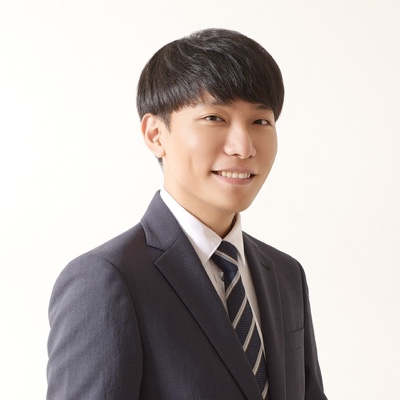 Prof. Seongil Wi
Seongil Wi is an assistant professor in the Department of Computer Science and Engineering, where he leads the Web Security Lab. He received his Ph.D. from KAIST, and his research focuses on finding and fixing security vulnerabilities in web applications, browsers, and, more recently, AI-powered web systems and agents.
The first session gives a bird’s-eye view of what computer science and engineering is, introduces the topics and professors you will meet this semester, and explains how the course will run.
Part 1 of 2
 Prof. Ranggi Hwang
Ranggi Hwang is an assistant professor in the Department of Computer Science and Engineering, where he leads the Computer Architecture and Co-design Lab (CoCoLab). He received his Ph.D. in electrical engineering from KAIST and interned at NVIDIA Research and Microsoft Research Asia. His research spans computer architecture, hardware-software co-design for AI, and AI accelerator design.
These two weeks look under the hood of the computer: how processors, memory, and operating systems actually run your programs, and why building efficient systems matters more than ever in the AI era.
Part 2 of 2
Prof. Ranggi Hwang
Second week of the Computer Systems module: an introductory lecture and hands-on exercise continuing from last week, taught by Prof. Ranggi Hwang of the Computer Architecture and Co-design Lab (CoCoLab).
Part 1 of 2
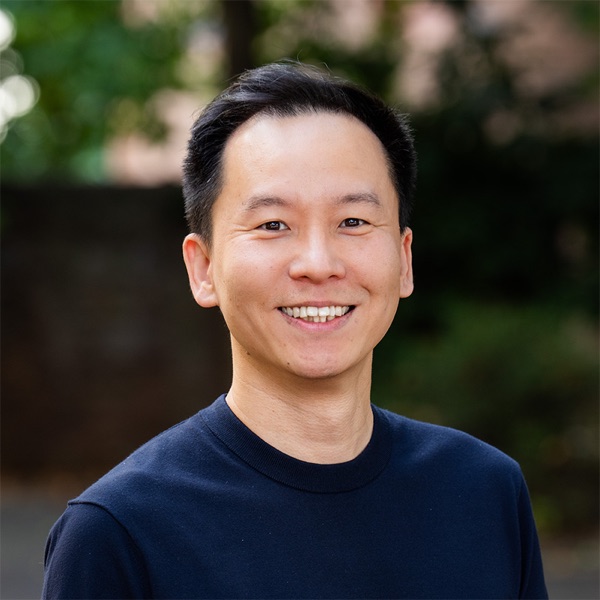 Prof. Seongkook Heo
Seongkook Heo leads the Ultimate Interface Lab. He builds interaction techniques and devices that connect people, computers, and the physical world, aiming for interfaces that are expressive, efficient, and frictionless. His work has received best paper and honorable mention awards at CHI, MobileHCI, VRST, and ISS, along with a Meta Research Award.
These two weeks introduce human-computer interaction: how to design, prototype, and evaluate interfaces people actually enjoy using, including the interfaces we will need for working with AI.
Part 2 of 2
Prof. Seongkook Heo
Second week of the Human-Computer Interaction module: an introductory lecture and hands-on exercise continuing from last week, taught by Prof. Seongkook Heo of the Ultimate Interface Lab.
 Prof. Junghoon Kim
Junghoon Kim is an associate professor who leads the Data Mining Lab. He received his Ph.D. from Nanyang Technological University, and his research covers algorithms and data mining, including cohesive subgraph discovery, community detection, and social network analysis.
This week introduces data science: how to turn raw data into insight, and what data analysis looks like in practice, with a hands-on exercise.
졸업생 세미나 Attendance required
In Korean Real-time English translation
 Injung Chung
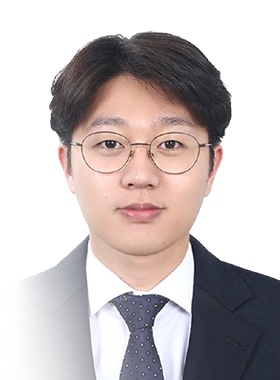 Prof. Myeonggyun Han
Two UNIST CSE alumni return to share where computer science took them after graduation.
정인중 (Injung Chung) is a director at Delightroom, the team behind the global alarm app Alarmy, and a founding member of CLASS101. He launched two startups during his studies and returned to finish his degree twelve years after first enrolling. Topic: entrepreneurship.
한명균 (Prof. Myeonggyun Han) is an assistant professor of computer science at Kyungpook National University. He completed both his B.S. and Ph.D. at UNIST and worked at ETRI before joining KNU. Topic: research and academia.
Attendance is mandatory. Attendance is taken as usual, and missing this session results in an immediate U (fail).
Given in Korean, with real-time English translation.
No class (Midterm exam period)
Part 1 of 2
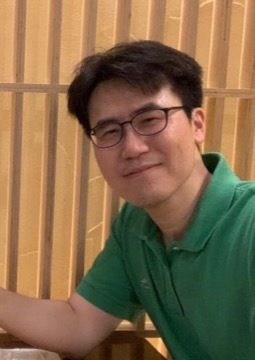 Prof. Jooyong Yi
Jooyong Yi is an associate professor who heads LOFT (Lab of SOFTware). His group builds autonomous techniques that keep software trustworthy by automatically detecting bugs, fixing them, and verifying the fixes. This work has only grown more important now that AI systems write much of our software.
This week covers the software engineering side of the module: how real-world software is designed, built, tested, and maintained, and what it takes for software to be something we can rely on.
Part 2 of 2
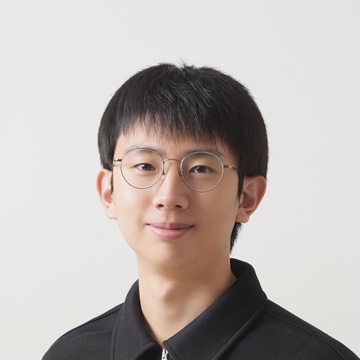 Prof. Jaemin Hong
Jaemin Hong is an assistant professor at UNIST, where he leads the Programming Languages Research Group (PLRG). He received his Ph.D. from KAIST in 2025, and his research spans programming languages and software engineering, including program transformation and static analysis, with recent work on translating C into safe Rust.
This week covers the programming languages side of the module: what a programming language actually is, how languages are designed and analyzed, and how better languages make software safer, with a hands-on exercise.
Part 1 of 2
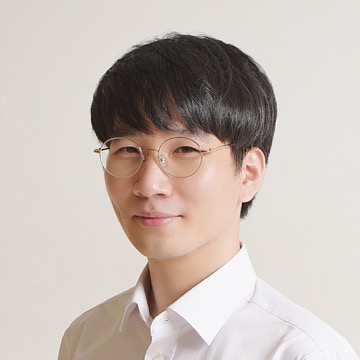 Prof. Taesik Gong
Taesik Gong is an assistant professor in CSE and the AI Graduate School, where he leads the Ubiquitous AI Lab. He received his Ph.D. from the KAIST School of Computing, was a research scientist at Nokia Bell Labs, and received the Google Ph.D. Fellowship in machine learning. His research makes AI work in the real world, from on-device AI to human-centered applications.
These two weeks introduce artificial intelligence: what machine learning actually is, how models learn, and how AI is built into the products and systems around us, with hands-on exercises.
Part 2 of 2
Prof. Taesik Gong
Second week of the Artificial Intelligence module: an introductory lecture and hands-on exercise continuing from last week, taught by Prof. Taesik Gong of the Ubiquitous AI Lab.
Part 1 of 2
 Prof. Minkyung Park
Minkyung Park is an assistant professor who leads the System and Network Security Lab (SANSL). She received her Ph.D. from Seoul National University and was a postdoctoral researcher at the University of Texas at Dallas before joining UNIST in 2026. Her research protects user data and makes computing systems more secure, from software vulnerability analysis to privacy-preserving computation.
These two weeks introduce computer security: how systems get attacked, how we defend them, and why security thinking matters for every computer scientist.
Panel Show Attendance required
In Korean Real-time English translation
Prof. Jooyong Yi
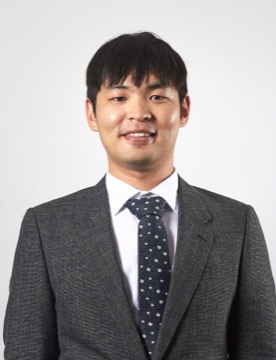 Prof. Hyungon Moon
Prof. Seongkook Heo
Prof. Hyungon Moon
Prof. Seongkook Heo
 Prof. Taehwan Kim
Four CSE professors introduce themselves and their fields, then open the floor for an ask-anything panel show: studying computer science, choosing a direction, career paths, and the role of computer science in the AI era.
Attendance is mandatory. Attendance is taken as usual, and missing this session results in an immediate U (fail).
Given in Korean, with real-time English translation.
Part 2 of 2
Prof. Minkyung Park
Second week of the Computer Security module: an introductory lecture and hands-on exercise continuing from Week 13, taught by Prof. Minkyung Park of the System and Network Security Lab (SANSL).
No class (Final exam period)